
The Quiet Slide: How Small Gaps in 3rd Grade Become 5th Grade Failures

Let’s set the stage for a moment: your child is in third grade and bringing home decent grades. Their report cards say “meeting expectations,” so everything feels okay. Then, very slowly and quietly, two years pass — and the same child is suddenly more frustrated, avoiding homework, and slipping in subjects that used to be fine.
What Changed?
Nothing changed in your child. The demands changed.
Gaps that were once invisible finally got exposed.
The Big Shift No One Warns Parents About
Between 3rd and 5th grade, something drastic happens. Instead of learning to read, your child has to read to learn. It’s the same with numbers: kids go from mastering number sense to using it for multi-step problems.
Third grade is the last year school teaches the how. From 4th and 5th grade onward, teachers assume the how and pile on the what.
What slips through the cracks is the child finishing 4th grade and heading into 5th without having fully understood part of their 3rd grade fundamentals. The past year was spent adding on to a foundation that is shaky underneath.
The Gaps That Hide in Plain Sight
When your child isn’t comfortable with certain fundamentals, it affects the rest of their academic understanding.
Take reading fluency: your child reads slowly and can tell you what one sentence means, but couldn’t tell you the meaning of the paragraph. This is one of the biggest gaps hiding in plain sight.
In math, a child who doesn’t know their multiplication table struggles with division — which bleeds into fractions, long division, and the word problems waiting in 5th grade math. When those concepts aren’t fully understood, fractions and place value get shaky too. Now their 5th grade math has nothing to stand on.
I especially see major gaps in writing. Students struggle to put together a complete, organized thought. Somewhere along the way, writing became less of a priority — but kids lose out on one of the most important skills in school and life: structure, cohesion, and well-thought-out ideas.
This also affects independent reading stamina. Think about it this way: if your child can barely write more than two sentences, reading might feel just as draining. The jump that should happen naturally — from short passages to chapter-length material — becomes stunted.
Why 5th Grade Is Where It Breaks (Not Sooner)
Here’s the part that catches most parents off guard: the gap was there in third grade. It just didn’t have anywhere to show up yet.
Think about how school is built. Each year quietly assumes your child mastered the year before. Third-grade multiplication becomes fourth-grade long division becomes fifth-grade fractions and multi-step word problems. Reading a paragraph becomes reading a chapter, then reading a chapter and answering questions about it and writing a response. Nothing is ever really “finished” — it just becomes the floor for whatever comes next.
I’ve seen 5th graders who couldn’t comprehend passages that were well within range for a 4th grader. Why? Because it was assumed they had already understood it in 3rd and 4th grade — and they cruised through the school system undetected.
So when a third grader has a small gap — multiplication facts that aren’t quite automatic, reading that’s a little slow and effortful — it doesn’t cost them much yet. The work is still simple enough to get through by concentrating a little harder. The grades still look fine.
The gap stays invisible.
But it doesn’t stay small.
Every new topic stacks on top of it, and your child ends up carrying more weight each year on the same shaky foundation. By fifth grade, they’re not just working on one hard thing — they’re working on one hard thing while their brain is still busy doing the third-grade work that should be automatic by now.
That’s why it seems to happen “all of a sudden.”
It wasn’t sudden. It was compounding.
And then there’s the part that hurts to watch.
The Confidence Problem
A fifth grader is old enough to notice when things aren’t clicking. They see classmates finish first. They watch homework that takes their friends twenty minutes eat up their whole evening.
And they draw the only conclusion a ten-year-old can: something is wrong with me.
That’s the real damage. It stops being about a missing skill and starts being about who they think they are.
“I’m bad at math.” “I’m just not a reader.” I’ve seen this with most of my students — it’s less about struggling with a specific skill and more about the belief that they will never get better.
This is one of the most damaging things in a child’s academic journey. Once that belief seeps in, it becomes much harder to address the 3rd grade gaps behind the 5th grade struggles. The child stops raising their hand, stops trying the hard problem, stops asking for help — because in their mind, why bother?
The confidence erodes at the exact moment school demands more of it.
This is the quiet reason fifth grade feels like a wall. It isn’t that your child suddenly can’t do the work. It’s that two years of small, unaddressed gaps finally came due — right as the material got heavier and their belief in themselves got lighter.
The Signs to Watch for Now
Don’t panic — instead, turn that background worry into specific things to watch for this week. The advantage of catching a gap in third or fourth grade is that it’s still small.
Reading
- Do they read aloud haltingly?
- Are they stopping, restarting, or sounding out words that should be familiar by now?
- Do they lose the thread of a story?
- Can they tell you what a paragraph was about right after reading it?
- Do they avoid longer material, or rush through it without understanding?
Math
- Does your child still count on their fingers for basic addition or multiplication?
- Do they get stuck the moment a problem has more than one step?
- Do they freeze on word problems?
- Do they get the answer right, but with effort that doesn’t match the difficulty?
Homework
- Does homework take far longer than it should — or than the teacher says it should?
- Do simple assignments trigger avoidance, stalling, or full-on meltdowns?
- Is “I don’t get it” the reflex before they’ve even tried the problem?
- Do they wait for you to sit down and walk them through everything rather than starting alone?
One of these on an off day is okay. What’s not okay is a cluster of them, showing up week after week.
Your child is trying to tell you something the report card won’t: the foundations aren’t solid.
And that’s the good news hiding in this list — every one of these is catchable. You noticing now is exactly what gives your child the head start.
The Good News: Gaps Are Fixable — But the Earlier, the Better
If you’ve read this far and recognized your child somewhere in it, take a breath. It’s okay.
The most important thing to know is this: gaps are fixable. Kids close them all the time. The only question that really matters is when you start.
That’s where timing does all the heavy lifting.
A gap you catch in third or fourth grade is a short climb. Your child is missing one year’s worth of a skill, the material is still simple enough to rebuild cleanly, and — just as important — they haven’t yet decided they’re “bad” at it. You can fill the gap before it costs them their confidence.
Wait until fifth or sixth grade, and that same gap has become a mountain. Now you’re not rebuilding one year, you’re rebuilding three — while new, harder material keeps arriving every week, and while your child is fighting the belief that they just can’t do this. It’s absolutely still doable. It’s just a much longer, steeper climb than it needed to be.
So the move isn’t to wait and see. It’s to find out exactly where your child stands — now, while the climb is short.
How We Close Gaps at Genie Academy
That’s the part we can help with. Here’s how we think about it:
- We find the actual gap, not the grade-level guess. A free assessment shows us where your child really is — which specific skills are solid and which are shaky — instead of assuming a third grader is doing “third-grade work.” The gap is almost never where the report card says it is.
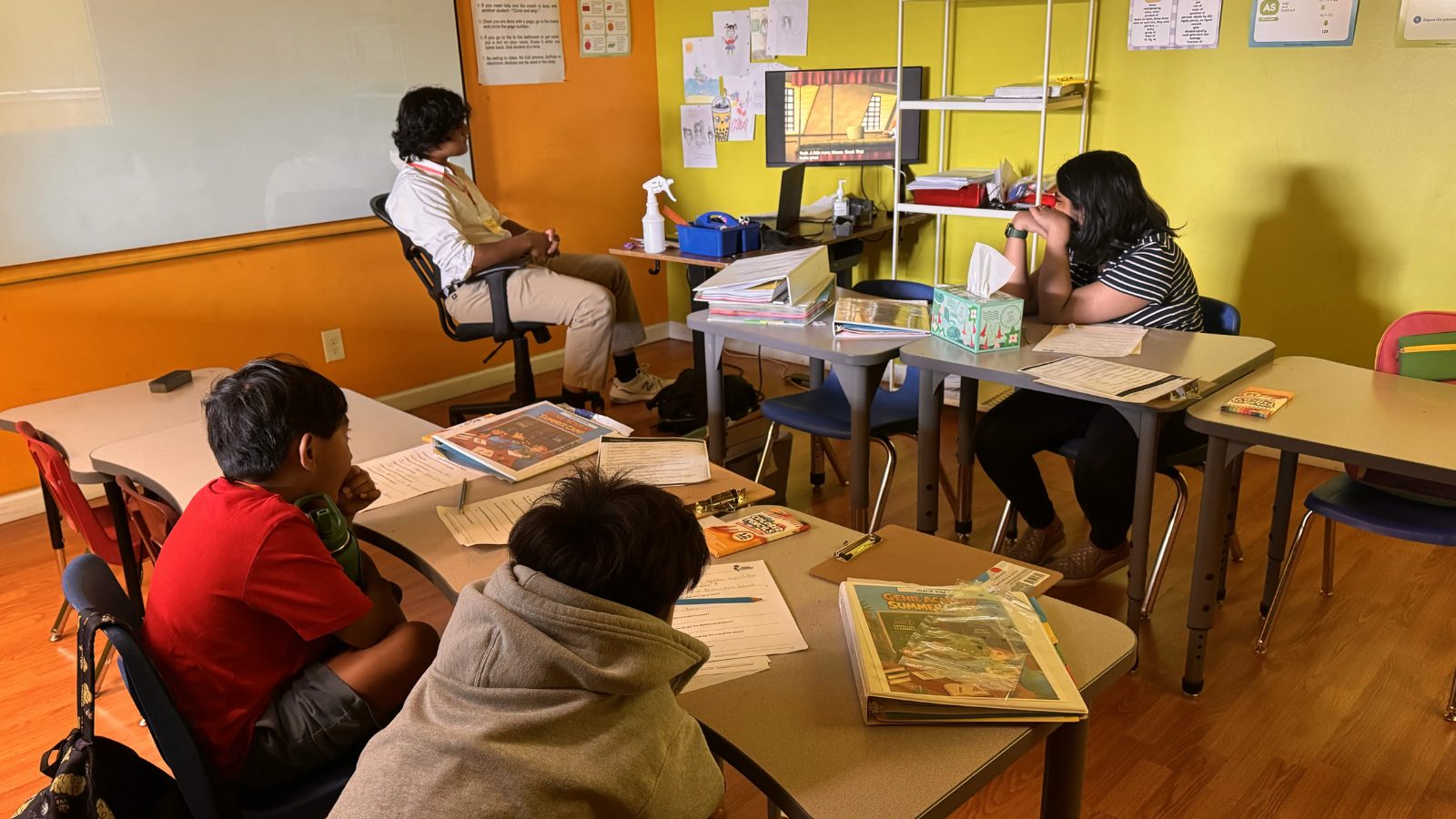
- Small classes mean no child gets lost. With a maximum of six students, your child can’t quietly slip to the back and coast. A coach actually notices when something isn’t clicking — which is exactly what didn’t happen in the crowd that let the gap form in the first place.
- We rebuild the foundation, not just tonight’s homework. Plenty of help gets a kid through the assignment in front of them. That’s not this. We go back to the missing skill underneath the struggle and rebuild it, so the problem stops coming back next week and next year.
None of this is about pressure or pushing your child ahead. It’s the opposite: catching a small thing while it’s still small — and protecting how your child feels about themselves before the hard years arrive.
Third-grade gaps don’t have to become fifth-grade struggles. The difference is almost always how early someone looks — and you’re already looking.
Frequently asked questions
Why do 3rd grade learning gaps show up in 5th grade?
School quietly assumes each year's skills were mastered the year before. A small gap in 3rd grade — multiplication facts that aren't automatic, reading that's slow and effortful — costs little while the work is simple, but every new topic stacks on top of it. By 5th grade the material is heavier and the child is still doing 3rd grade work that should be automatic, so the struggle appears suddenly even though it was compounding for two years.
What are the warning signs of a learning gap in elementary school?
In reading: halting reading aloud, losing the thread of a story, or being unable to say what a paragraph was about. In math: finger-counting for basic facts, freezing on multi-step or word problems. With homework: assignments taking far longer than they should, avoidance or meltdowns over simple tasks, or waiting for a parent before starting. One sign on an off day is normal — a cluster repeating week after week is the signal.
Can 3rd grade learning gaps be fixed?
Yes — kids close gaps all the time, and the earlier you start, the shorter the climb. A gap caught in 3rd or 4th grade is about one year of a missing skill, rebuilt before it costs the child their confidence. Waiting until 5th or 6th grade means rebuilding several years while new material keeps arriving. A free assessment finds the actual missing skill rather than the grade-level guess.
Want to make learning this fun every day?
Book a free 60-minute assessment and we'll build a plan for your child.
Get Your Child's Free AssessmentYou Might Also Like


Your child is already curious. Let's channel that.
Genie Academy builds focus, confidence, and a love of learning — math, reading, writing & coding in NJ.
Get Your Child's Free Assessment